
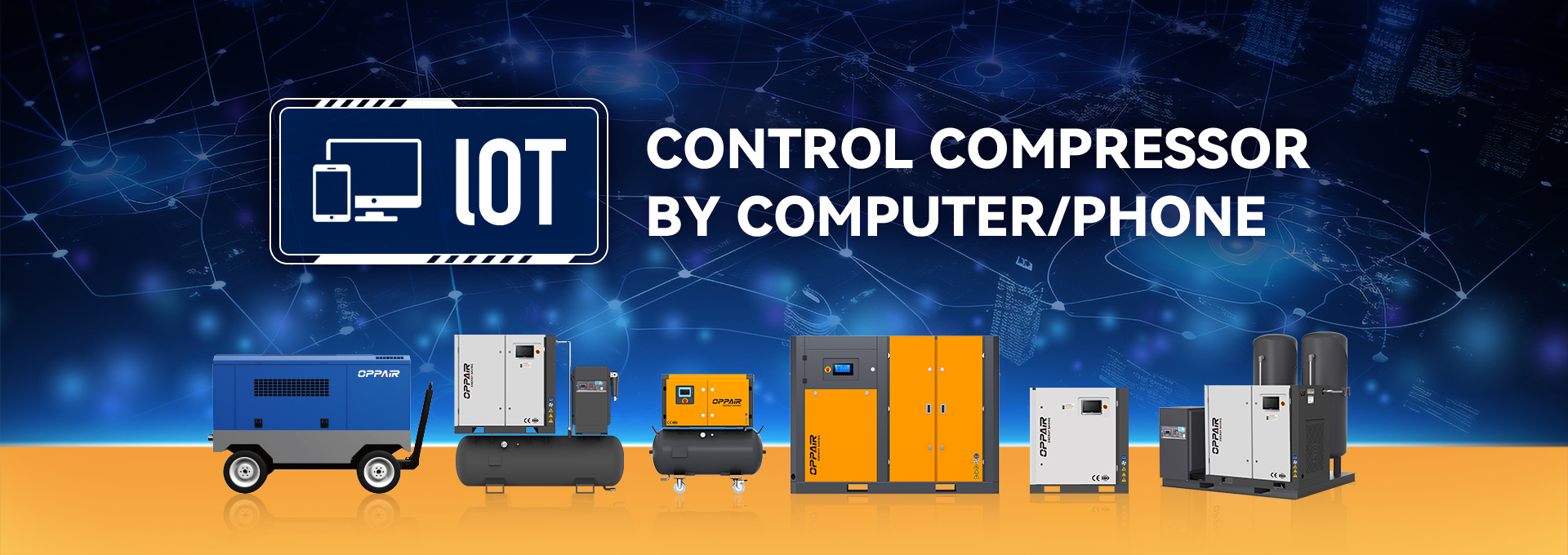
In the era of Industry 4.0, is your air compressor station still reliant on manual inspections? In the industrial manufacturing sector, compressed air is hailed as the “fourth largest energy source,” with air compressor systems accounting for approximately 10%-35% of the entire factory’s electricity consumption. However, traditional air compressors face pain points such as limited monitoring methods, weak early warning capabilities, and high energy consumption.
The advent of IoT technology is changing this situation. Through remote monitoring and intelligent management, unmanned operation and energy efficiency optimization of air compressor stations are no longer a dream.
Industry Pain Point: The Hidden Costs of Air Compressor System Management
Air compressors, as general-purpose machinery in industrial production and manufacturing, are widely used in automobile manufacturing, machine tools, steel metallurgy, food packaging, plastic molding, and many other fields.
However, traditional air compressor systems suffer from problems such as dispersed equipment, limited monitoring methods, and weak early warning capabilities, which not only reduce system reliability and increase manufacturers’ maintenance costs but also exacerbate the energy burden on end users.
In traditional management models, factories require dedicated personnel to monitor air compressor stations, performing manual meter readings, inspections, and basic troubleshooting. This experience-based approach makes precise energy efficiency control difficult.
More seriously, hidden costs are often overlooked—equipment idling, pipeline leaks, improper pressure settings, and untimely maintenance all silently erode company profits.
Four Key Considerations for Brand Selection:
1. Matching Product Performance to Usage Scenarios
When selecting an air compressor, the first consideration should be the matching of product performance to the usage scenarios. Different industries and processes have varying requirements for compressed air quality, pressure, and flow rate.
For example, the food and pharmaceutical industries have extremely high air quality requirements and need to choose oil-free air compressors; while automotive manufacturing may prioritize equipment stability and continuous air supply capabilities.
OPPAIR offers a complete range of air compressor models to meet diverse customer needs.
2. Brand’s Technological Strength and Innovation Capabilities
Technological strength is a key indicator of an air compressor brand’s core competitiveness. This includes the company’s R&D investment, number of patents, and technological innovation capabilities. OPPAIR has been a professional air compressor manufacturer for 11 years, boasting a complete team, comprehensive certifications, reliable quality, and guaranteed after-sales service.
Air compressors equipped with IoT remote monitoring capabilities can automatically collect and report operational data through on-site smart gateways, enabling real-time monitoring, alarm push notifications, and remote processing—a basic requirement for modern factories.
3.Case Studies and Market Reputation
Brand case studies are a direct reflection of market recognition. A brand chosen by numerous industry leaders typically signifies that its product reliability and stability have been tested by the market.
By reviewing a brand’s successful cases in similar industries, one can anticipate its performance in specific environments. Market reputation is also an important reference for understanding a brand’s long-term operational stability.
OPPAIR exports to over 100 countries and has received consistent praise.
4.Comprehensive After-Sales Service
After-sales service is crucial for the long-term stable operation of air compressors. This includes service network coverage, response time, a professional technical team, and spare parts supply. OPPAIR has a professional after-sales team available 24/7.
Reputable brands offer comprehensive “one-stop, one-code, lifetime service” solutions, establishing independent files for each piece of equipment, providing full lifecycle management, and offering timely preventative maintenance recommendations to minimize unexpected downtime.
With the continuous development of Industrial Internet of Things (IoT) technology, intelligent remote monitoring of air compressors has become an irreversible trend. Centralized management and maintenance through cloud platforms will significantly improve the precision and efficiency of enterprises’ control over air compressor systems, representing a tangible step in industrial intelligent transformation.
In the future, intelligent air compressor systems will no longer be isolated energy devices, but rather a crucial component of the entire factory’s energy management and intelligent manufacturing system.
OPPAIR is looking for global agents, welcome to contact us for inquiries: WhatsApp: +86 14768192555
#Electric Rotary Screw air Compressor
#Screw Air Compressor With Air Dryer
#High Pressure Low Noise Two Stage Air Compressor Screw(https://www.oppaircompressor.com/tow-stage-high-pressure-screw-air-compressor/)
#All in one screw air compressors(https://www.oppaircompressor.com/4-in-1-laser-cutting-compressor/)
#Skid mounted laser cutting screw air compressor(https://www.oppaircompressor.com/skid-mounted-laser-compressor/)
#oil cooling screw air compressor(https://www.oppaircompressor.com/oil-cooled-screw-air-compressor/)
#oil free compressors(https://www.oppaircompressor.com/oil-free-air-compressor/)
Post time: May-18-2026


