
Currently, China’s industrial sector is comprehensively promoting energy conservation and carbon reduction transformation. On-site oxygen production to replace bottled oxygen and liquid oxygen has become a necessity for cost reduction in major factories, and the installation volume of PSA/VPSA on-site oxygen production equipment has been increasing year by year. However, a major pain point exists in the industry: many companies blindly pursue high-purity oxygen, needlessly increasing equipment investment and electricity costs; and in some operating conditions, the oxygen purity does not meet the standards, leading to decreased production efficiency and increased product defect rates.
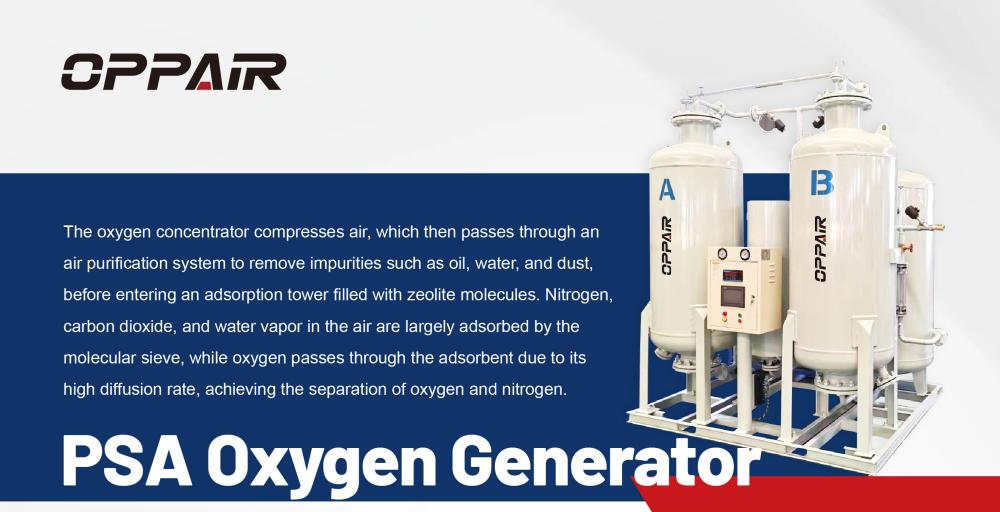
Higher oxygen purity is not always better. Different production processes and downstream industries have strict purity matching standards. Combining the latest national standard GB/T 3863-2025 Industrial Oxygen Specification and the technical parameters of mainstream oxygen production equipment, this article comprehensively sorts out the five purity levels of industrial oxygen, corresponding oxygen production equipment, and applicable scenarios for all industries. It also dismantles common selection misconceptions to help industrial and mining enterprises accurately select equipment and strictly control gas costs.
1. Low purity (90%~93%): Suitable for oxygen-enriched combustion scenarios where oxygen concentration requirements are not high. 1. Oxygen for combustion enhancement in glass kilns, cement rotary kilns, and waste incinerators:** This aims to increase flame temperature and reduce energy consumption, without requiring high-purity oxygen.
2. Medium purity (93%~95%): Commonly used in aquaculture oxygenation, wastewater treatment aeration, and some small-scale chemical oxidation reactions. This purity is sufficient for biological aerobic processes or general oxidation processes, offering the highest cost-effectiveness.
3. High purity (≥99.2% – 99.6%): Industrial grade one standard, suitable for metal welding and cutting, metallurgical steelmaking (such as converter oxygen blowing), chemical synthesis (such as ethylene oxidation), and other processes requiring vigorous oxidation reactions or requiring protection from impurities.
4. Ultra-high purity (≥99.9%): Used in semiconductor manufacturing, optical fiber preform production, aerospace propellants, and specialty fine chemicals. These scenarios are extremely sensitive to impurities such as moisture and hydrocarbons, requiring deep purification.
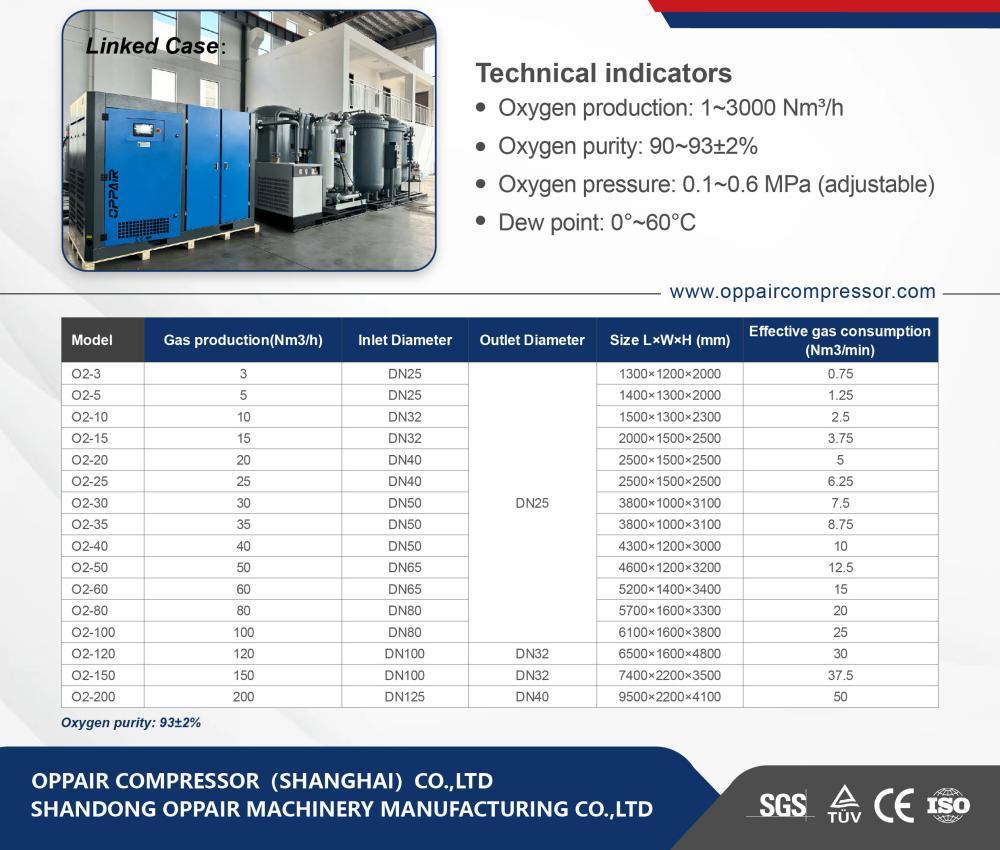
Key Precautions:
1. Strictly prohibit mixing: Industrial oxygen may contain trace amounts of carbon monoxide, carbon dioxide, acetylene, and oil, but it must never be used for medical breathing, otherwise it will cause lung irritation, poisoning, or even pulmonary edema.
2. Process determines purity: Cryogenic air separation easily achieves high purity (≥99.5%), pressure swing adsorption (PSA) typically produces 90%-95% purity, and membrane separation has the lowest purity (30%-50%). The selection must match the dual requirements of purity and gas volume for the specific scenario.
3. Standard Differences: The national standard GB/T 3863 stipulates that industrial oxygen grade I must be ≥99.5%, and grade II ≥99.2%. In practical applications, if the process does not have special restrictions on impurities, around 93% is sufficient for most combustion and aquaculture needs. There is no need to blindly pursue high purity to save costs.
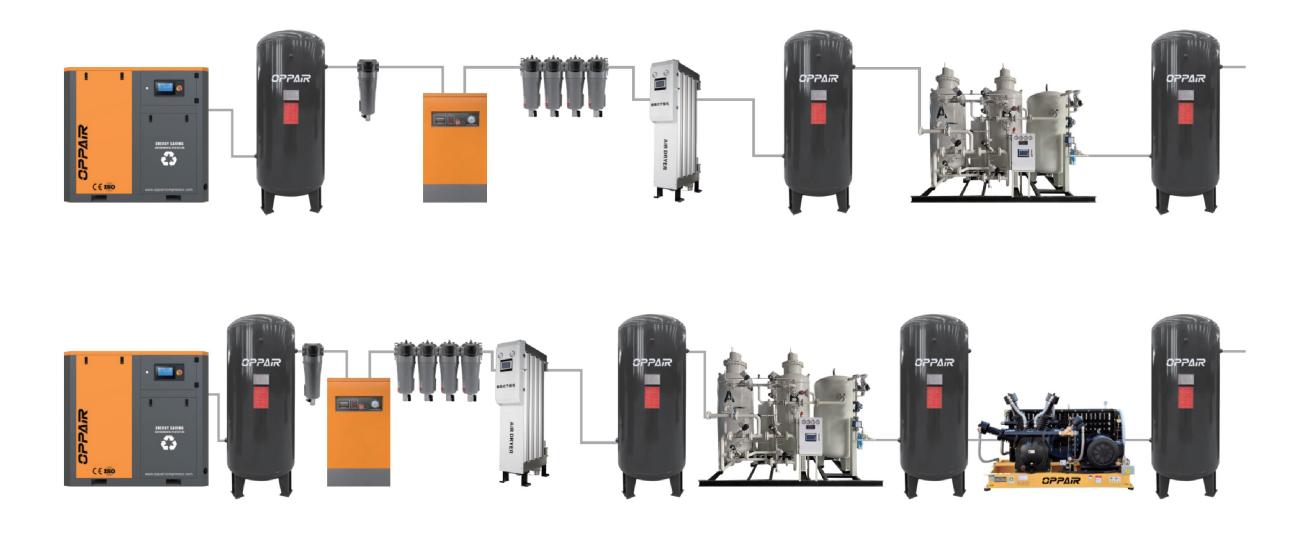
Three Frequently Used Industry Selection Misconceptions:
Misconception 1: Higher oxygen purity means better production results. Truth: Every 1% increase in purity significantly increases the power consumption of the oxygen generator. 93% oxygen is sufficient for conventional processes in building materials, wastewater treatment, and lithium batteries. Blindly choosing 99.5% high-purity oxygen directly increases electricity costs by more than 30%.
Misconception 2: Industrial oxygen generators can replace medical oxygen. Truth: Even at 93% purity, industrial oxygen generators lack medical gas purification and filtration devices and contain impurities such as moisture and dust. They are strictly prohibited from being used for human respiration oxygen supply. The two adhere to completely different safety standards.
Myth 3: All combustion-supporting conditions require high-purity oxygen. Truth: For ordinary kilns and boilers, 25%-40% membrane separation oxygen enrichment is sufficient, offering far better cost-effectiveness than molecular sieve oxygen generators. Selecting the right model for your specific needs is key to cost reduction.
Summary: The core principle for selecting industrial oxygen generators is: optimal for the operating conditions, not necessarily the higher the purity. For basic combustion support, membrane separation oxygen enrichment is suitable; for general industrial production, 93% standard PSA oxygen generators are recommended; only high-end precision processes require cryogenic high-purity oxygen of 99.5% or higher. Before purchasing oxygen generators, companies must clearly define their process gas purity and flow rate requirements to truly achieve both safe production and energy savings.
OPPAIR is looking for global agents, welcome to contact us for inquiries:
TEL/WeChat/WhatsApp: +86 14768192555
Email:Info@oppaircompressor.com
#Electric Rotary Screw air Compressor #Screw Air Compressor With Air Dryer
#High Pressure Low Noise Two Stage Air Compressor Screw
#All in one screw air compressors
#Skid mounted laser cutting screw air compressor
#oil cooling screw air compressor
Post time: Jun-23-2026


