
As public awareness regarding healthy eating grows, competition within the food industry is becoming increasingly fierce. For food enterprises, ensuring hygiene and safety throughout the production process is of paramount importance. As air compressors constitute one of the indispensable pieces of equipment in the food industry, their impact on food hygiene and safety is attracting ever-greater attention. Consequently, oil-free air compressors have emerged as the preferred choice for the food industry.
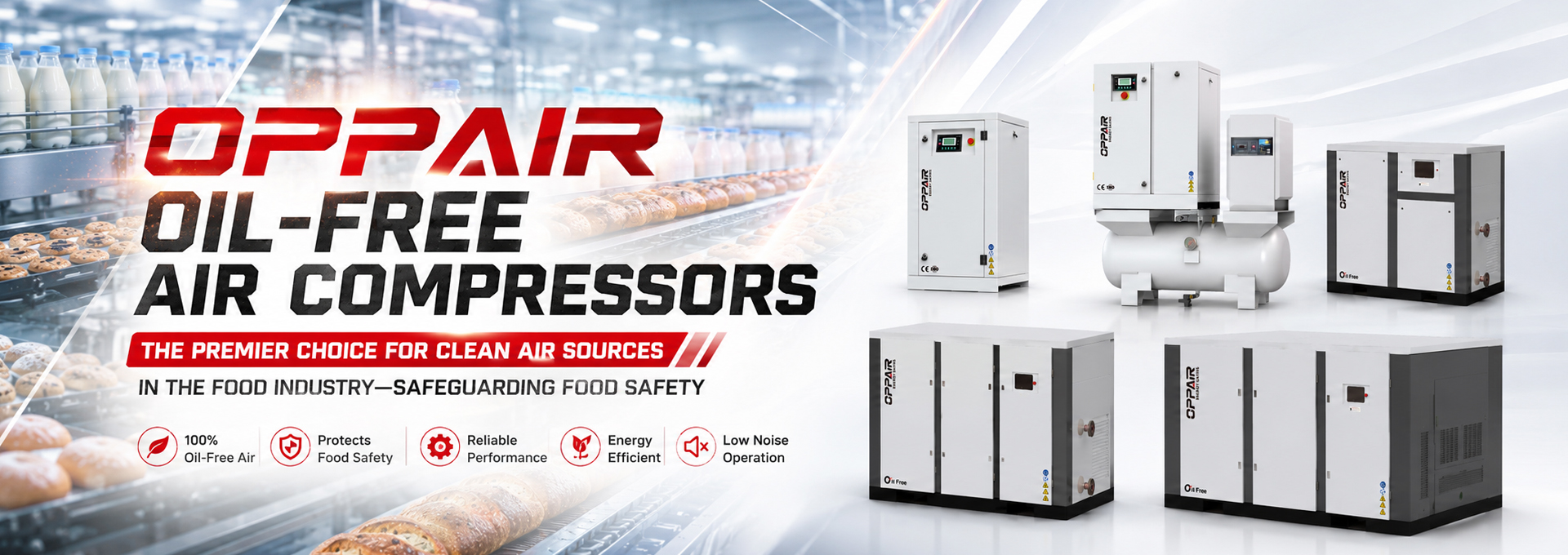
1. Safeguarding Food Safety and Eliminating Contamination Risks
Oil-free air compressors effectively prevent oil contamination. In traditional air compressors, oil serves as an essential lubricant. However, during the air compression process, this oil can become entrained in the airflow, leading to air contamination. In food production environments, the presence of oil contaminants in the air can have severe repercussions for food hygiene and safety. Oil-free air compressors eliminate the need for oil-based lubrication, thereby preventing such contamination.
2. Oil-Free Air Compressors Boost Production Efficiency
Traditional air compressors require periodic oil changes and filter replacements to ensure proper operation. In contrast, oil-free air compressors do not require these additional maintenance tasks, thereby reducing production line downtime and boosting overall production efficiency.
3. Minimizing Equipment Malfunctions and Extending Service Life
Oil-free air compressors help reduce production costs. Traditional air compressors incur additional operational costs due to the need for regular oil changes and filter replacements. Since oil-free air compressors eliminate these maintenance requirements, they effectively lower production costs.
4. Compatible with Sterile Cleanroom Environments; Preserving Food Flavor, Quality, and Shelf Life
Production facilities for dairy products, beverages, baked goods, frozen foods, and snack items all operate within high-standard sterile environments. Oil-free air compressors do not generate oily exhaust fumes or compromise the cleanliness of the workshop, making them perfectly suited to meet the rigorous demands of such production environments.
Oil-based impurities can alter a food product’s original texture, color, and aroma; furthermore, they accelerate the oxidation and spoilage of ingredients, thereby shortening the product’s shelf life. A pure air supply does not interfere with the physicochemical properties of food products, thereby maximizing the preservation of natural flavors and ensuring consistent product quality.
5. Compliance with Strict Industry Testing and Entry Standards
For critical processes such as food filling, sealing and packaging, ingredient mixing, and automated packaging, industry regulations explicitly mandate the use of oil-free compressed air.
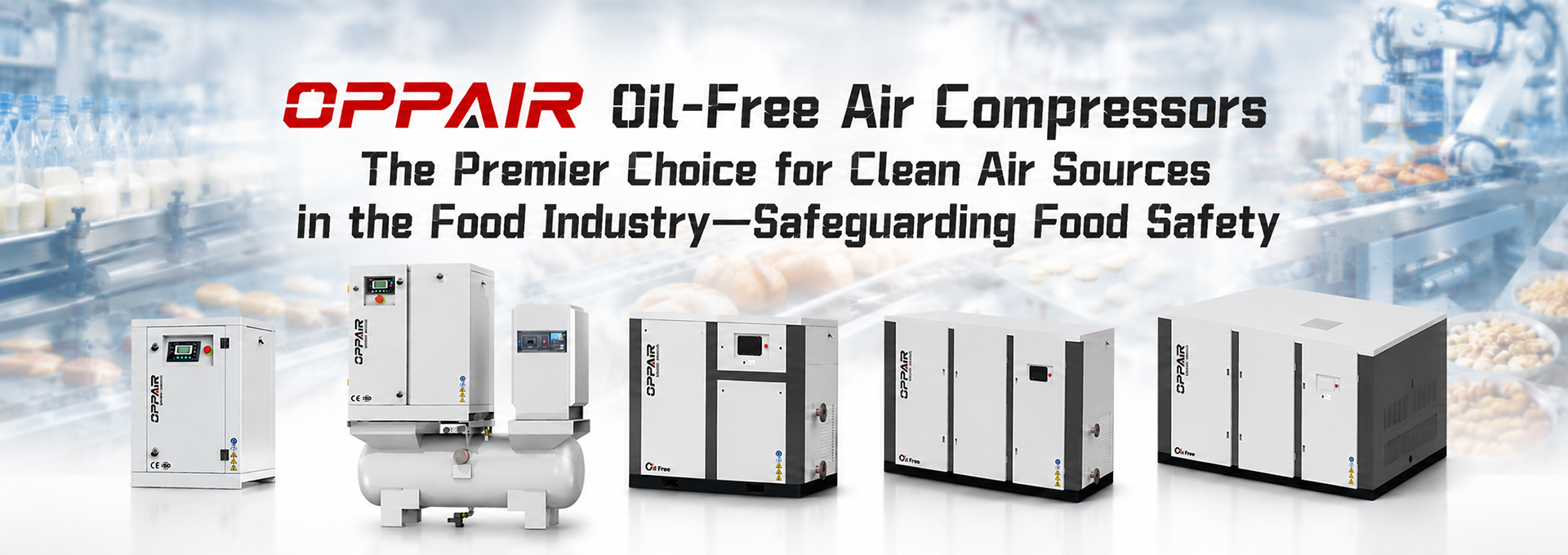
The adoption of oil-free equipment is essential for successfully passing sanitary spot checks and qualification audits, thereby ensuring the smooth market launch and distribution of products.
Oil-free air compressors have become the preferred equipment choice in the food industry, primarily because they prevent oil contamination, boost production efficiency, and reduce operational costs. For food enterprises, selecting an oil-free air compressor stands as one of the critical measures for guaranteeing food hygiene and safety. Furthermore, oil-free air compressors offer superior reliability and stability. Since they do not require oil as a lubricant, issues such as oil leakage or degradation are entirely eliminated, thereby ensuring the consistent reliability and stability of the equipment. This is of particular importance to the food industry, as any equipment malfunction could result in production line shutdowns and the contamination of food products.
In addition, oil-free air compressors help minimize noise and vibration. Traditional air compressors generate noise and vibration during operation—factors that not only degrade the working environment but may also cause damage to both the equipment and the products. In contrast, because oil-free compressors do not rely on oil for lubrication, they operate with significantly lower noise and vibration levels; this enhances the comfort of the work environment while simultaneously safeguarding the integrity of the equipment and the products.
In summary, oil-free air compressors offer a host of advantages—including the prevention of oil contamination, increased production efficiency, reduced operating costs, superior reliability and stability, minimized noise and vibration, and an extended service life—making them the definitive choice for the food industry.
During the production process, compressed air frequently comes into direct contact with raw ingredients, semi-finished goods, and packaging materials. If the air contains oil—as is the case with oil-lubricated systems—oil mist and grease particles can adhere to food surfaces or become entrained within beverages, baked goods, and meat products. This poses a severe risk of food contamination and can trigger critical food safety issues. Class 0 oil-free air compressors, however, generate a source of pure, oil-free air, thereby eliminating the risk of oil contamination at the very source and ensuring full compliance with national food safety production standards.
OPPAIR is looking for global agents, welcome to contact us for inquiries: WhatsApp: +86 14768192555
#Electric Rotary Screw air Compressor
#Screw Air Compressor With Air Dryer
#High Pressure Low Noise Two Stage Air Compressor Screw
(https://www.oppaircompressor.com/tow-stage-high-pressure-screw-air-compressor/)
#All in one screw air compressors
(https://www.oppaircompressor.com/4-in-1-laser-cutting-compressor/)
#Skid mounted laser cutting screw air compressor
(https://www.oppaircompressor.com/skid-mounted-laser-compressor/)
#oil cooling screw air compressor
(https://www.oppaircompressor.com/oil-cooled-screw-air-compressor/)
#oil free compressors
(https://www.oppaircompressor.com/oil-free-air-compressor/)
Post time: May-26-2026


